
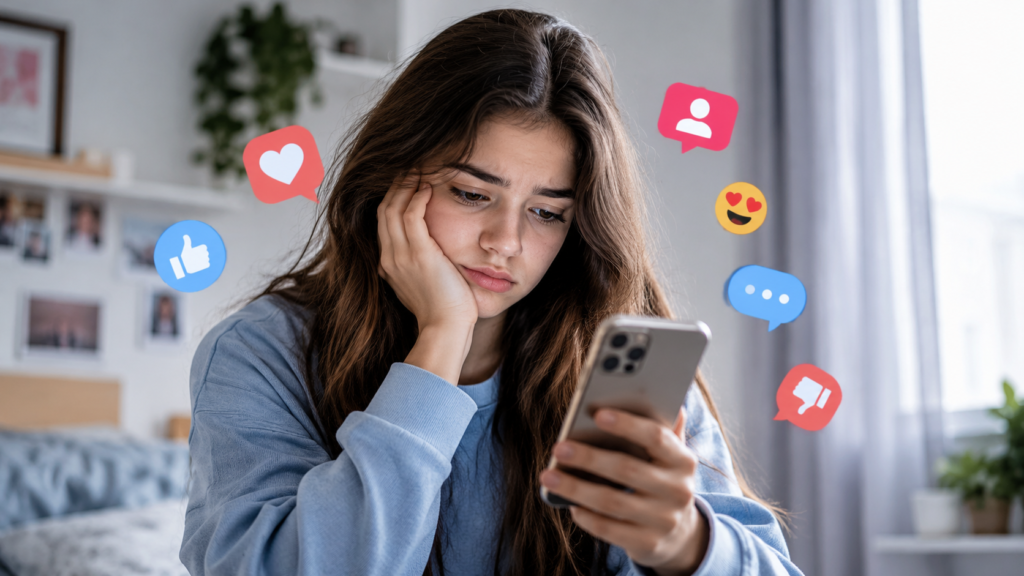
Does social media affect your confidence and mood? Discover its impact on mental health and self-esteem, plus tips for healthier digital habits.
Social media has become a big part of our everyday lives. From checking Instagram in the morning to scrolling through Facebook or TikTok before bed, many of us spend hours connected to the online world. It helps us stay in touch, discover new things, and share important moments.
But have you ever closed an app feeling less confident, anxious, or unhappy with your life? You are not alone. While social media offers many benefits, excessive use and constant exposure to carefully edited online content can influence how we think, feel, and see ourselves.
Understanding how social media affects your mental health is important for maintaining emotional balance. Let’s explore its effects on self-esteem, common warning signs, and practical ways to develop a healthier relationship with the digital world.
What Is the Connection Between Social Media and Mental Health?
Social media influences our emotions through the content we watch, the conversations we have, and the feedback we receive online.
A supportive message from a friend can brighten your day, while a negative comment or an upsetting post can affect your mood. These everyday interactions can shape our emotional wellbeing over time.
The impact depends on how frequently you use social media, what content you consume, and how you respond to online experiences.
Healthy use can encourage connection and learning. However, excessive scrolling, negative interactions, and constant comparisons may contribute to emotional stress.
How Does Social Media Affect Your Self-Esteem?
Your self-esteem reflects how you see and value yourself. Unfortunately, social media can sometimes make it harder to maintain a positive self-image.
Here are some common ways this happens:
- Comparing your life with others: Seeing someone’s holiday photos, career achievements, or expensive lifestyle may make you feel that your own life is less exciting. Remember, you are comparing your everyday reality with someone else’s selected highlights.
- Unrealistic beauty standards: Filters, editing tools, and carefully posed pictures can create unrealistic expectations about appearance. Constant exposure to these images may affect body confidence.
- Seeking online validation: When your happiness depends on likes, comments, or followers, you may start measuring your self-worth through online attention.
- Negative comments and cyberbullying: Hurtful messages, criticism, and online harassment can damage confidence and create feelings of embarrassment or isolation.
What Are the Negative Effects of Social Media on Mental Health?
Excessive or unhealthy social media use can affect different areas of emotional and psychological wellbeing.
1. Increased Anxiety and Stress
Do you feel the need to check your phone every few minutes? Constant notifications, messages, and online updates can create pressure to stay connected.
Fear of missing out (FOMO) can also make you anxious when you see friends attending events or enjoying experiences without you.
2. Depression and Emotional Distress
Repeated social comparison, online rejection, and negative interactions may contribute to sadness, frustration, and low mood.
Although social media does not automatically cause depression, unhealthy usage patterns may worsen existing emotional difficulties in some people.
3. Sleep Problems and Mental Exhaustion
Scrolling through social media late at night can interfere with healthy sleep habits. Engaging content can also make it difficult to put your phone down.
Poor sleep may leave you feeling tired, irritable, and less focused the following day.
4. Social Isolation and Loneliness
Having hundreds of online followers does not necessarily mean having meaningful relationships.
When online interactions replace face-to-face conversations, you may miss opportunities to build deeper emotional connections with family and friends.
Are There Any Positive Effects of Social Media on Mental Health?
Not all social media experiences are harmful. When used thoughtfully, these platforms can support emotional wellbeing in several ways.
Some positive effects include:
- Building supportive communities: Online groups can help people connect with others who share similar experiences.
- Raising mental health awareness: Educational content can encourage conversations about anxiety, depression, and emotional wellbeing.
- Staying connected: Social platforms make it easier to communicate with distant friends and family.
- Accessing helpful information: Users can discover educational resources and professional mental health guidance.
- Reducing feelings of isolation: Supportive online interactions may help people feel understood and connected.
The key is to use social media in ways that support your wellbeing rather than negatively influence it.
What Are the Warning Signs That Social Media Is Affecting Your Mental Health?
Sometimes, unhealthy social media habits develop gradually. You may not even realise how much they affect your daily routine.
Watch for these warning signs:
- Constantly checking your phone, even without notifications.
- Feeling anxious or irritated when you cannot access social media.
- Frequently comparing your appearance, lifestyle, or achievements with others.
- Feeling less confident after scrolling through social platforms.
- Losing sleep because you spend too much time online.
- Ignoring personal relationships or daily responsibilities.
- Feeling emotionally overwhelmed by online comments or interactions.
If these experiences happen regularly, it may be time to reconsider your digital habits.
How Can You Protect Your Mental Health While Using Social Media?
You do not have to delete every social media app to protect your mental wellbeing. Small, consistent changes can make a meaningful difference.
Try these practical habits:
- Set screen-time limits: Decide how much time you want to spend on social media each day and stick to it.
- Avoid unhealthy comparisons: Remind yourself that online posts rarely show the complete picture of someone’s life.
- Unfollow negative accounts: Choose content that makes you feel informed, inspired, and supported.
- Take digital breaks: Spend some time away from your phone, especially during meals and family activities.
- Prioritise real connections: Make time for meaningful conversations and face-to-face relationships.
- Follow positive content: Engage with educational, motivational, and mental health awareness resources.
- Maintain a healthy sleep routine: Avoid scrolling before bedtime and keep your phone away while sleeping.
Remember, the goal is not to avoid technology but to create a healthier balance between your online and offline life.
When Should You Seek Professional Mental Health Support?
Occasional frustration or low confidence after using social media is common. However, persistent emotional difficulties deserve attention.
Consider speaking with a mental health professional if:
- Anxiety or sadness regularly affects your daily life.
- Your self-esteem continues to decline.
- Online experiences create ongoing emotional distress.
- You struggle to control your social media use.
- Your sleep, relationships, work, or studies are suffering.
A qualified psychologist can help you understand your emotional triggers, recognise unhealthy thinking patterns, and develop healthier coping strategies.
At Openminds Center in Dubai, individuals can access professional psychology and counselling services to support their emotional and psychological wellbeing. With appropriate guidance, you can work towards greater self-confidence, healthier habits, and improved emotional balance.
Seeking support is not a sign of weakness. It is a positive step towards taking care of yourself.
Frequently Asked Questions (FAQs)
1. How does social media affect mental health?
Social media can influence mental health through online interactions, social comparisons, and exposure to different types of content. Excessive use may contribute to anxiety, stress, loneliness, and low self-esteem, while positive interactions can support connection and emotional wellbeing.
2. Can social media lower your self-esteem?
Yes. Constantly comparing your appearance, lifestyle, or achievements with others online may make you feel inadequate. Depending on likes and comments for validation can also affect your confidence.
3. Does social media cause anxiety and depression?
Social media does not automatically cause anxiety or depression. However, excessive use, cyberbullying, negative interactions, and unhealthy comparisons may contribute to emotional difficulties or worsen existing symptoms.
4. How does social media affect teenagers’ mental health?
Teenagers may experience peer pressure, cyberbullying, unrealistic beauty standards, and social comparison online. These experiences can affect their confidence, sleep, mood, and emotional development.
5. What are the signs of social media addiction?
Common warning signs include constantly checking apps, struggling to reduce screen time, feeling restless without access, neglecting responsibilities, and continuing to scroll despite negative effects on daily life.
6. How can I protect my mental health while using social media?
Set daily screen-time limits, avoid negative accounts, take regular breaks, prioritise real-life relationships, and follow content that supports your interests and emotional wellbeing.
7. Can taking a break from social media improve mental health?
Yes. Taking a break may help reduce digital distractions, improve sleep habits, and create more time for meaningful activities. Its benefits can vary depending on your individual circumstances and social media habits.
8. When should I seek professional help for social media-related stress?
Consider professional support when social media use contributes to persistent anxiety, low mood, poor self-esteem, sleep difficulties, or problems with everyday responsibilities and relationships.
Conclusion
Social media can be a useful part of modern life, but the way we use it matters. Constant comparisons, unrealistic expectations, and negative online experiences can affect our mental health and self-esteem.
The good news is that you can build healthier digital habits without disconnecting from the online world completely. Set boundaries, choose positive content, spend time with people you care about, and make your emotional wellbeing a priority.
If social media-related stress, anxiety, or low self-confidence is affecting your daily life, professional guidance can help.
Take the first step towards better mental wellbeing with Openminds Center in Dubai. Reach out to explore professional psychology and counselling support for your emotional health.