
Can you train your brain to work better? Explore how neurofeedback may improve focus, emotional balance, stress management, and sleep.
Your brain works around the clock. It helps you think, learn, remember, manage emotions, and respond to everyday situations. But what happens when you struggle to concentrate, feel overwhelmed by stress, or find it difficult to manage your emotions?
Sometimes, supporting your brain’s ability to regulate its activity can make a difference. This is where Neurofeedback Therapy comes into the picture.
Neurofeedback is a brain-training approach that uses real-time information about brain activity to help individuals practise self-regulation. It may support areas such as attention, emotional regulation, and relaxation.
But how does it actually work, and who can benefit from it? Let’s explore how neurofeedback may support brain function and mental wellbeing.
What Is Neurofeedback Therapy?
Neurofeedback Therapy is a non-invasive brain-training approach that helps individuals learn to regulate certain patterns of brain activity. It uses electroencephalography (EEG) technology to measure electrical signals produced by the brain.
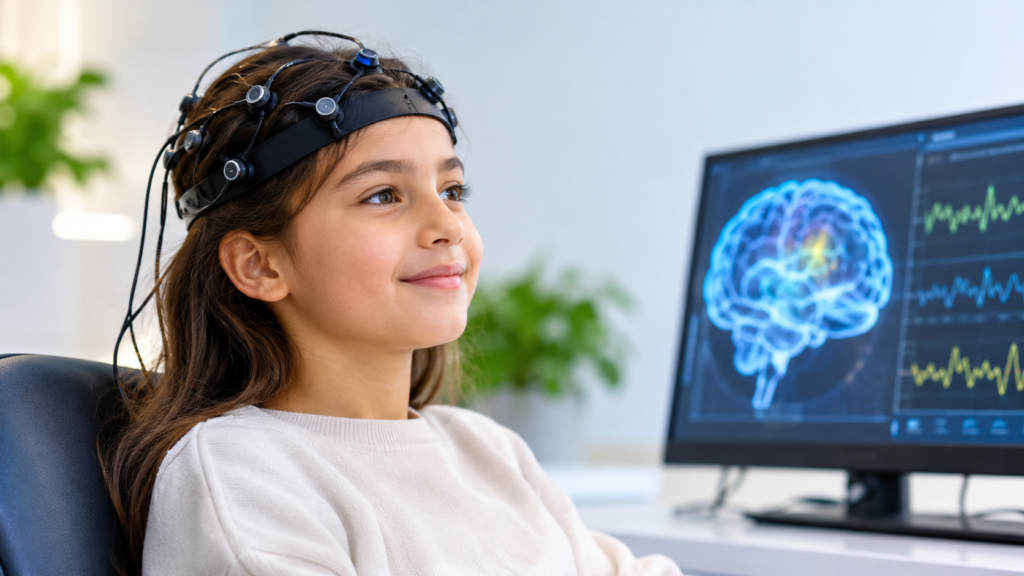
During a session, small sensors are placed on the scalp to monitor brainwave activity. The system then provides real-time feedback through visual displays, sounds, or simple activities.
For example, a person might watch a video that responds to their brain activity. When the activity moves towards a selected training goal, the video continues playing smoothly.
Unlike traditional talk therapy, which often focuses on thoughts, feelings, and behaviour, neurofeedback focuses on providing feedback about brain activity. Both approaches may complement each other as part of an individualised mental health plan.
How Does Neurofeedback Therapy Work?
Your brain produces different patterns of electrical activity, commonly described as brainwaves. These patterns are associated with different states, including alertness, relaxation, and sleep.
Neurofeedback training generally follows a simple process:
- Brain activity monitoring: EEG sensors measure electrical activity from the scalp.
- Real-time feedback: A computer translates brain activity into visual or audio signals.
- Brain training: Individuals receive feedback while completing simple activities.
- Repeated practice: Over multiple sessions, they practise responding to feedback and developing self-regulation skills.
The goal is to help individuals recognise and practise healthier patterns of brain activity. Results can vary, and the effectiveness of neurofeedback depends on the individual and the concern being addressed.
How Does Neurofeedback Therapy Help Improve Brain Function?
Neurofeedback may support different aspects of brain function. Here are some potential benefits.
1. Improves Focus and Concentration
Do you find yourself reading the same paragraph several times or getting distracted by small things? Difficulty maintaining attention can affect work, studies, and everyday activities.
Neurofeedback training may help individuals practise attention regulation by providing feedback about selected patterns of brain activity. This can be particularly relevant for people who struggle with concentration.
2. Supports Emotional Regulation
Managing emotions is an important part of mental wellbeing. However, some people find it difficult to stay calm when facing frustration, pressure, or unexpected changes.
Neurofeedback may help individuals practise regulating brain activity associated with different mental states. When combined with appropriate psychological support, it may contribute to a broader approach to emotional wellbeing.
3. May Help Manage Stress and Anxiety
Constant worry, racing thoughts, and difficulty relaxing can make everyday life exhausting.
Neurofeedback explores patterns of brain activity associated with different states of alertness and relaxation. Training may help some individuals practise self-regulation and relaxation.
However, it should not replace established anxiety treatments or professional mental health care.
4. Supports Cognitive Performance
Your cognitive abilities help you process information, solve problems, learn new skills, and remember important details.
Neurofeedback research explores whether training can support certain cognitive functions, including attention and information processing. However, improvements in memory and overall cognitive performance are not guaranteed.
5. May Support Better Sleep
A restless mind can make it difficult to fall asleep or maintain a regular sleep routine.
Neurofeedback has been explored as a possible supportive approach for certain sleep-related concerns. By working with patterns of brain activity, it may help some individuals practise relaxation and self-regulation.
Good sleep habits and appropriate medical assessment remain important parts of managing sleep difficulties.
Who Can Benefit from Neurofeedback Therapy?
Neurofeedback may be considered for individuals who want additional support with certain aspects of brain regulation and mental wellbeing.
It may be explored for:
- Children with attention difficulties: To support attention training as part of a broader care plan.
- Individuals with ADHD: As a possible complementary approach to managing attention-related challenges.
- Adults experiencing stress: To practise relaxation and self-regulation.
- People with emotional regulation difficulties: To explore additional support for managing emotional responses.
- Individuals with sleep concerns: To investigate whether neurofeedback could form part of a wider sleep-support plan.
Not everyone will benefit equally. A professional assessment can help determine whether this approach is appropriate.
What Conditions Can Neurofeedback Therapy Support?
Neurofeedback has been studied in connection with several neurological and mental health concerns.
These include:
- ADHD and attention difficulties: Research has explored its potential role in attention and impulse regulation.
- Anxiety and stress-related symptoms: It may offer additional support for practising relaxation and self-regulation.
- Sleep difficulties: Some research has investigated its use in supporting sleep-related concerns.
- Emotional and behavioural concerns: It may be considered as one component of a wider support programme.
It is important to understand that neurofeedback is not a guaranteed treatment for these conditions. It should complement, rather than replace, evidence-based medical or psychological care when needed.
What Happens During a Neurofeedback Therapy Session?
If you are considering neurofeedback for the first time, you may wonder what happens during an appointment.
Although the process can vary, a typical session may include:
- Initial assessment: A professional discusses your concerns, symptoms, goals, and relevant history.
- Sensor placement: Small EEG sensors are placed on your scalp to monitor brain activity.
- Brain activity monitoring: The system records and displays selected brainwave patterns.
- Feedback activities: You participate in simple computer-based activities that respond to your brain activity.
- Progress review: Your professional reviews your response and discusses the next steps.
The process is non-invasive and generally does not involve electrical stimulation of the brain.
How Many Neurofeedback Sessions Are Needed?
There is no single number of sessions that works for everyone. The recommended duration depends on individual needs, training goals, and progress.
Some people may require more sessions than others. Factors such as the nature of the concern, age, consistency, and response to training can influence the plan.
A professional should regularly review progress rather than follow a fixed schedule without considering individual results.
Is Neurofeedback Therapy Safe?
EEG-based neurofeedback is generally considered a non-invasive approach because it monitors brain activity rather than delivering electrical stimulation.
However, individual experiences can vary. Some people may experience temporary tiredness, headaches, or difficulty concentrating after a session.
It is important to work with trained professionals who can assess your needs, explain the process, and monitor your response.
Neurofeedback may not be suitable for everyone, and it should always be considered within an appropriate care plan.
Why Choose Professional Neurofeedback Therapy in Dubai?
Choosing the right professional support is important when exploring brain-training approaches. Every individual has different needs, challenges, and treatment goals.
At Openminds Center, individuals can explore professional mental health and neuroscience services in Dubai with an emphasis on understanding their concerns and identifying appropriate support.
A personalised approach helps ensure that:
- Your individual concerns and goals receive attention.
- Professionals assess your needs before recommending an approach.
- Progress can be reviewed throughout the training process.
- Neurofeedback can be considered alongside other appropriate mental health services.
Whether you are exploring support for attention, emotional regulation, or general wellbeing, professional guidance can help you make an informed decision.
Frequently Asked Questions (FAQs)
- What is the main purpose of neurofeedback therapy?
The main purpose is to help individuals practise regulating selected patterns of brain activity through real-time feedback. It is explored as a supportive approach for attention, relaxation, and self-regulation.
- Can neurofeedback improve brain function?
Neurofeedback may support certain aspects of brain function, such as attention and self-regulation. However, outcomes vary, and improvements in overall brain performance are not guaranteed.
- Does neurofeedback help with ADHD?
Neurofeedback has been studied as a complementary approach for ADHD, particularly in relation to attention and impulse control. It should not replace established ADHD treatments.
- Can neurofeedback help reduce anxiety?
Some individuals may find neurofeedback helpful as part of a wider approach to managing anxiety. However, evidence of its effectiveness remains mixed, and it is not a replacement for established anxiety treatments.
- How long does neurofeedback therapy take?
The duration varies depending on individual needs, goals, and response to training. A professional can recommend a suitable schedule after an assessment.
- Is neurofeedback therapy suitable for children?
It may be considered for some children, particularly those experiencing attention difficulties. A qualified professional should assess the child’s needs before recommending it.
- Is neurofeedback a permanent solution?
Neurofeedback cannot guarantee permanent results. Outcomes differ between individuals, and some may need ongoing support or additional interventions to maintain progress.
Conclusion
Your brain plays an important role in almost everything you do, from staying focused at work to managing emotions and getting a good night’s sleep. Supporting healthy brain regulation can therefore be an important part of overall wellbeing.
Neurofeedback Therapy offers a brain-training approach that may help individuals practise self-regulation and support certain aspects of attention, emotional balance, and relaxation. However, its benefits vary, and it works best when recommended as part of an appropriate, personalised care plan.
If you are interested in exploring how neurofeedback may support your mental wellbeing, contact Openminds Center in Dubai to learn more about available neuroscience services and professional guidance.
Taking the first step towards understanding your brain can help you make more informed decisions about your wellbeing.