
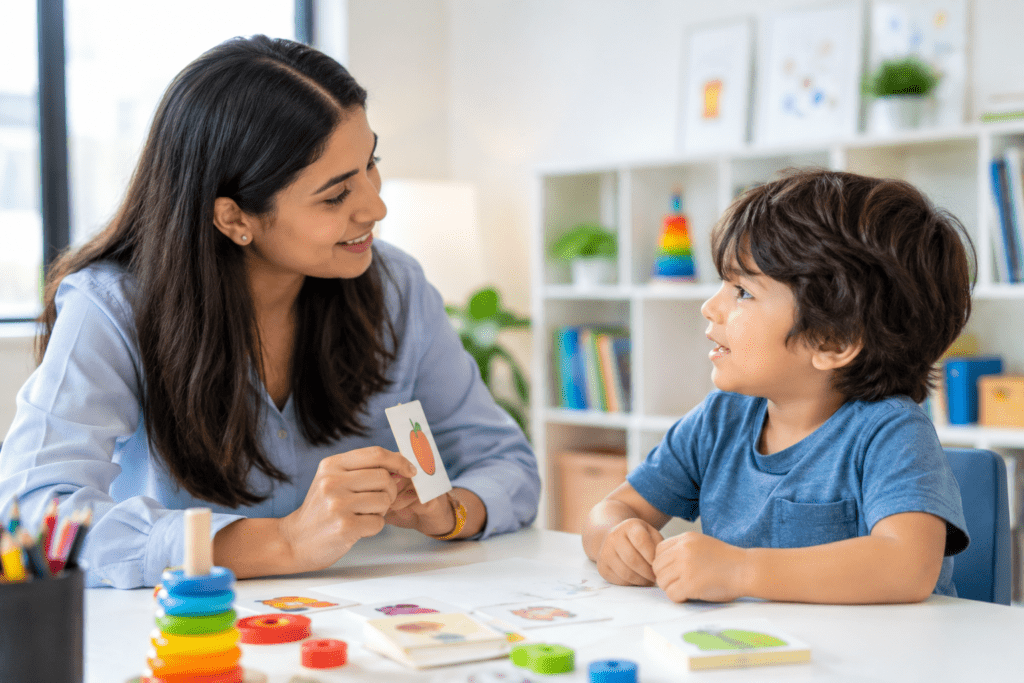
Is your child struggling to express feelings or connect with others? Discover how Autism Therapy can build communication, confidence, and everyday social skills.
We use communication all day without thinking about it. We ask for help, share a joke, tell someone how we feel, or simply point to something we want.
For some children with autism, these everyday interactions may not come naturally. They may have difficulty using words, understanding language, reading facial expressions, or starting conversations.
The good news? Communication can be developed with the right support. Autism Therapy can help children build practical communication skills in ways that match their individual needs, abilities, and pace.
What Communication Challenges Can Children With Autism Experience?
Communication looks different for every child with autism. Some children may speak fluently but struggle with conversations, while others may have delayed speech or use very few words.
Common challenges can include:
- Delayed speech and language development
- Difficulty expressing needs, thoughts, or emotions
- Trouble understanding questions or instructions
- Difficulty starting or maintaining conversations
- Limited use of gestures or facial expressions
- Challenges understanding social cues
For example, a child may know exactly what they want but become frustrated because they cannot explain it. That frustration can sometimes lead to crying, withdrawal, or challenging behaviour.
How Does Autism Therapy Support Communication Development?
Effective therapy starts with understanding the child rather than expecting every child to follow the same approach.
Professionals assess communication abilities and create goals based on the child’s needs. Therapy may focus on requesting objects, answering questions, following instructions, expressing emotions, or interacting with others.
The goal is functional communication. In simple terms, it means helping a child communicate what they need and understand what others are saying in everyday life.
Therapists also create opportunities for children to practise these skills during play, routines, learning activities, and social interactions.
The Role of Speech Therapy in Autism
Speech therapy can play an important role in supporting children with autism who experience speech or language difficulties.
A speech and language therapist may work on vocabulary, sentence formation, pronunciation, understanding language, and expressing ideas.
Therapy can also encourage important conversation skills such as listening, responding, asking questions, and taking turns.
Think of it like learning a new game. Children need time to understand the rules, practise them, and gradually become more confident playing with others.
How Autism Therapy Builds Social Communication Skills
Communication is not only about saying words. It is also about knowing when, why, and how to communicate.
Therapy can help children learn how to start conversations, respond appropriately, understand social cues, and take turns while talking or playing.
Children may practise these skills with therapists before using them with siblings, classmates, teachers, and friends.
Over time, these structured opportunities can make social interactions feel more predictable and manageable.
Alternative Ways Children With Autism Can Communicate
Not every child communicates best through speech, and that is completely okay.
Depending on their needs, children may use pictures, communication boards, gestures, sign language, or Augmentative and Alternative Communication (AAC) devices.
These tools give children another way to express wants, needs, choices, and emotions.
Importantly, alternative communication does not simply mean giving up on speech. For some children, it can provide a bridge that helps them communicate successfully while their other communication abilities continue to develop.
How Parents Can Support Communication at Home
Parents play a huge role because communication practice does not stop when therapy ends.
Try using simple, clear language and give your child enough time to respond. Avoid immediately answering for them when they are trying to communicate.
You can also talk during everyday activities. While making breakfast, for example, name foods, describe actions, and encourage your child to make choices.
Reading together is another simple strategy. Ask questions about pictures, pause to let your child respond, and celebrate their attempts.
Most importantly, focus on communication rather than perfection. A gesture, picture, sound, word, or device can all represent meaningful progress.
Why Early Intervention Matters
When communication difficulties appear early, getting appropriate support can help children develop skills that are useful at home, school, and in the community.
Early intervention can support language development, social interaction, independence, and confidence.
Consistency matters too. When parents, therapists, and teachers use similar strategies, children get more opportunities to practise what they learn.
Choosing the Right Autism Therapy for Your Child
There is no single therapy plan that works for every child.
A professional assessment can help identify your child’s strengths, communication needs, developmental abilities, and areas that need support.
A multidisciplinary approach can be particularly useful. Depending on the child’s needs, the team may include speech and language therapists, psychologists, occupational therapists, behavioural specialists, and other professionals.
The best plan is one that focuses on the child’s individual goals rather than simply following a standard checklist.
When Should Parents Consider Professional Support?
Parents may want to seek professional guidance if their child:
- Has limited or delayed speech
- Struggles to communicate basic needs
- Has difficulty understanding everyday instructions
- Finds social interaction challenging
- Becomes frequently frustrated when trying to communicate
- Loses communication skills they previously developed
You do not have to wait for communication difficulties to become severe before asking for help. An assessment can provide clarity and help you understand what support may be appropriate.
FAQs About Autism and Communication
Can Autism Therapy improve communication skills?
Yes. Therapy can help children develop communication skills based on their individual abilities and needs. Goals may include speech, understanding language, social communication, gestures, or alternative communication methods.
At what age should Autism Therapy begin?
Support can begin whenever a child has identified communication or developmental needs. Early intervention can be helpful, but older children can also benefit from targeted therapy.
Does every child with autism need speech therapy?
Not necessarily. Some children may benefit greatly from speech and language therapy, while others may need different forms of developmental or behavioural support. A professional assessment can help determine what is appropriate.
Can a child with autism develop spoken language?
Some children with autism develop spoken language at different stages, while others may communicate more effectively using alternative methods. Each child’s development is unique.
How can parents improve communication skills at home?
Parents can use simple language, give children time to respond, encourage different forms of communication, read together, talk about daily activities, and celebrate communication attempts.
How long does autism communication therapy take?
There is no fixed timeline. Progress depends on the child’s needs, goals, consistency of therapy, and opportunities to practise communication at home and in other environments.
Conclusion
Every child communicates differently, and progress may not always look the way parents expect. For one child, progress might mean saying a new word. For another, it could mean pointing to a picture, using an AAC device, answering a question, or joining a conversation.
The goal of Autism Therapy is not simply to make every child communicate in the same way. It helps children express themselves, understand others, participate in daily life, and become more independent.
If you have concerns about your child’s communication or development, professional guidance can help you understand the next steps.
Looking for Autism Therapy in Dubai?
At Openminds Center, individualized support can help children work toward meaningful communication and developmental goals. Speak with our team to explore an appropriate assessment and therapy plan for your child.